
Parkinson's, Balance, and the Inner Ear: The Connection Explained

There's a part of your body working behind the scenes every single moment you're upright. It's not your legs. It's not even your eyes. It's a small but incredibly important system tucked inside your inner ear, and most people don't think about it until something goes wrong.
For people living with Parkinson's disease, something goes wrong more often than it should. Dizziness, a sudden sense of tipping, trouble sensing where your body is positioned, and feeling unsteady even when standing still. These experiences are frustrating, and they can be hard to explain to people who haven't felt them.
What many people don't realize is that a lot of these experiences connect back to the vestibular system and the way Parkinson's interferes with how it works.
This blog breaks down what the vestibular system actually does, why Parkinson's disrupts it, what that disruption feels like in daily life, and most importantly, what you can do about it.
What Is the Vestibular System and Why Should You Care
Before we get into the problem, it helps to understand what we're actually talking about.
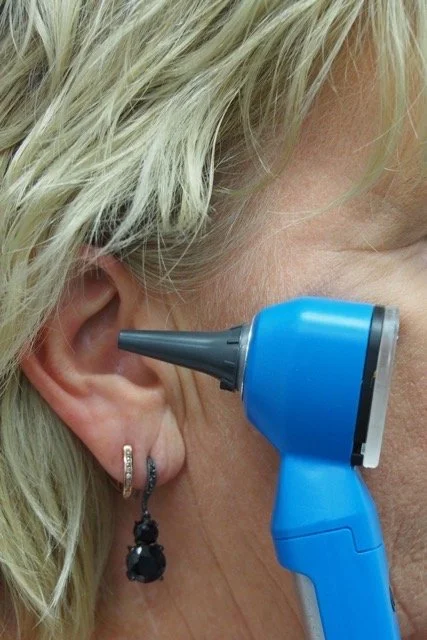
The vestibular system lives in your inner ear. It's made up of tiny fluid-filled canals and sensors that detect two things: the position of your head in space, and how quickly your head is moving. Every time you tilt your head, turn around, stand up from a chair, or look over your shoulder, your vestibular system is sending information to your brain.
Your brain takes that information and combines it with two other sources: what your eyes are seeing and what your muscles and joints are feeling. Together, these three streams of input give your brain a full picture of where you are and how to keep you upright.
When all three systems are working well and communicating clearly, balance feels automatic. You don't have to think about it. You just move.
But when the vestibular system isn't sending accurate or timely signals, the brain doesn't get the full picture it needs. And when that happens alongside Parkinson's disease, which already affects the speed and accuracy of the brain's motor signals, the result is a balance system that's working much harder than it should be, and still coming up short.
That's the core of the problem, and it's worth understanding in a little more detail.
Why Parkinson's Makes Your Balance System Work Against You

Parkinson's disease is primarily known for its effect on dopamine, the chemical messenger that helps the brain coordinate smooth, controlled movement. When dopamine levels drop, movements slow down, become smaller, and lose their automatic quality.
What's less talked about is how Parkinson's affects the way the brain processes sensory information, including the signals coming from the vestibular system.
Research has shown that people with Parkinson's have difficulty integrating information from multiple sensory sources at once. In a healthy balance system, the brain smoothly combines input from the eyes, the inner ear, and the body's muscles and joints. In Parkinson's, that integration slows down and becomes less reliable.
Here's where it gets important: the brain doesn't just passively receive vestibular signals. It also has to decide how much weight to give each source of information depending on the situation. In a dark room, your eyes aren't helpful, so the brain leans more on the vestibular system and body feedback. On an uneven surface, the body's joint sensors become less reliable, so the brain relies more on the inner ear.
With Parkinson's, this switching and weighting process becomes impaired. The brain may over-rely on one source or fail to compensate when another source becomes unreliable. That's why people with Parkinson's often struggle most in situations where the environment changes: stepping from a hard floor onto carpet, walking in low light, or moving through a crowded space where visual cues are confusing rather than helpful.
Vestibular dysfunction in Parkinson's isn't always about the inner ear itself being damaged. It's often about the brain's reduced ability to use vestibular information correctly. And that distinction matters because it means the problem is something that targeted training can actually address.
Now, let's look at what this actually feels like day to day.
Vestibular Dysfunction in Parkinson's: What It Feels Like Day to Day

The effects of vestibular disruption in Parkinson's don't always announce themselves clearly. They often show up as a collection of small experiences that are easy to dismiss individually but add up to a significant impact on daily life.
Here are some of the most common signs:
Dizziness or lightheadedness when standing up quickly or changing position
A floating or tilting sensation, even when standing still on a flat surface
Difficulty walking in low light or in spaces where the floor and walls look similar
Unsteadiness when turning the head while walking, such as looking to the side to check for traffic
Trouble on escalators, moving walkways, or uneven ground, where the surface itself is in motion
A sense that the room is moving or shifting, especially after turning around
Difficulty knowing where the body is without looking directly at the floor or a fixed object
Increased instability in crowded spaces, where visual information is busy and hard to use
Hesitation before stepping off a curb or onto a different surface
Nausea or disorientation with sudden head movements
It's worth noting that some of these experiences overlap with other Parkinson's symptoms, which can make them hard to identify as vestibular-related specifically. But the pattern often becomes clearer when symptoms are worse during transitions, in changing environments, or when visual information is reduced or unreliable.
These aren't just inconveniences. They affect how freely a person moves, how much confidence they feel outside the home, and how willing they are to participate in activities they used to enjoy. Left unaddressed, the result is often reduced movement, which leads to weaker muscles and even more instability over time.
The encouraging part is that vestibular-related balance challenges in Parkinson's are not something you simply have to live with. There are specific, practical things that help.
Vestibular Balance Problems in Parkinson's: What Helps and Where to Start
The vestibular system responds to training. So does the brain that relies on it. This is one of the most important things to understand. You can improve how your brain processes balance information with the right kind of practice, done consistently over time.
Here's what that looks like in practice.
1. Practice Gaze Stabilization Exercises
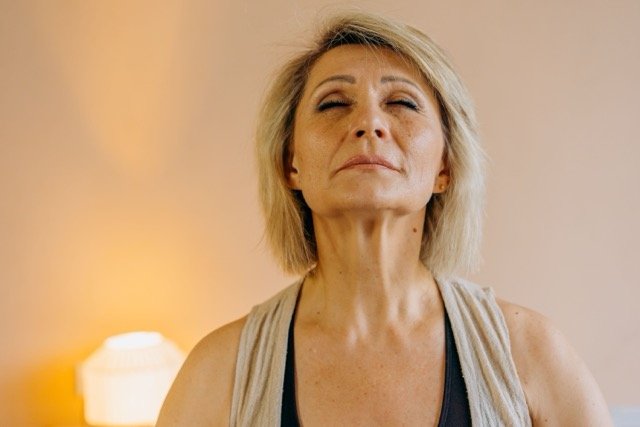
One of the most direct ways to train the vestibular system is through gaze stabilization exercises. These involve keeping your eyes focused on a fixed point while moving your head slowly from side to side or up and down.
This sounds simple, but it's a specific challenge for the brain. It trains the vestibular-ocular reflex, the connection between your inner ear and your eyes, to stay accurate during head movement. Over time, this reduces dizziness and improves your ability to track your environment while moving.
Start slowly. A few minutes a day is enough in the beginning. The goal is consistency, not intensity.
2. Train Balance Across Different Surfaces and Conditions
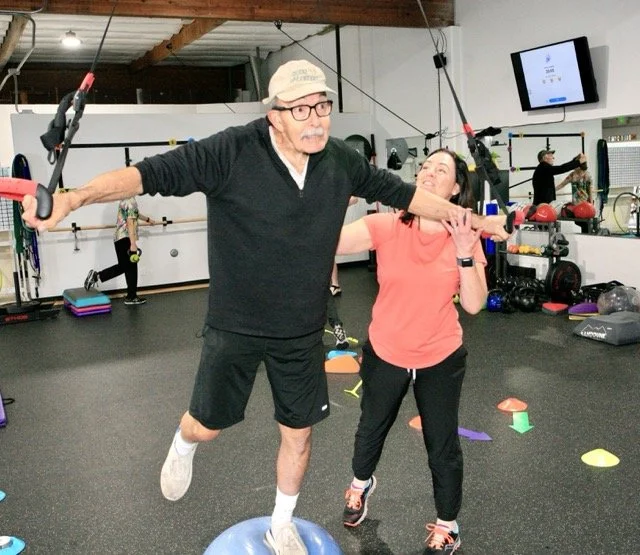
Because Parkinson's impairs the brain's ability to switch between sensory sources, deliberately practicing balance in varied conditions helps retrain that switching ability.
This might look like standing on a folded towel or a slightly soft surface with your eyes open, then with your eyes closed. Or walking in a dimly lit hallway. Or practicing turning your head while walking slowly down a corridor.
The idea is to gently challenge the brain's balance system in a controlled way, so it gets better at managing the real-world conditions you encounter every day.
3. Use Big, Intentional Movements
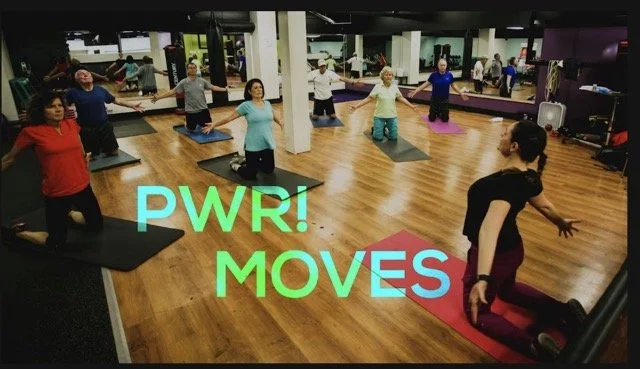
Parkinson's causes movements to get smaller over time, and smaller movements give the balance system less information to work with. Practicing large, deliberate movements, including big steps, wide arm swings, and upright posture, feeds more accurate input back into the system.
This is one of the core principles behind PWR! Moves, a Parkinson's-specific exercise framework developed by physical therapists. PWR! Moves focuses on four fundamental movement patterns: rising from the floor, shifting weight, stepping, and reaching. These patterns are trained at an amplitude that challenges the brain to send stronger, clearer movement signals.
For vestibular balance specifically, the weight-shifting and stepping components of PWR! Moves are particularly relevant. They train the body to move through space with more deliberate control, which directly supports the brain's ability to process and respond to vestibular input. Incorporating PWR! Moves into a regular routine gives the vestibular system more opportunities to practice accurate signaling during real movement.
4. Strengthen the Core and Hips
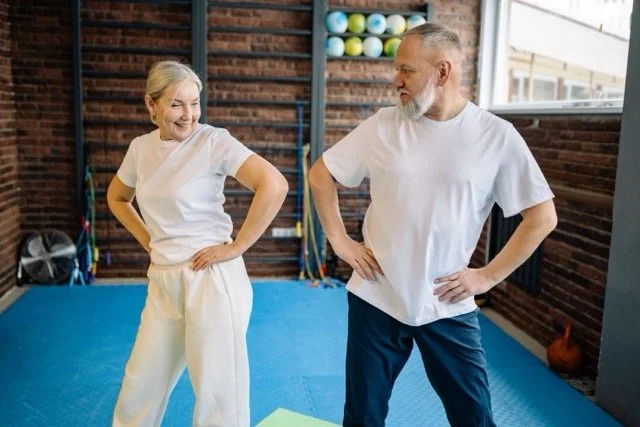
A strong core and stable hips reduce how much corrective work the vestibular system has to do in the first place. When your trunk is stable, your head stays steadier during movement, which means cleaner signals to the inner ear.
Hip and core strengthening doesn't need to be complicated. Standing exercises with support, seated trunk work, and body-weight movements all contribute to the kind of stability that makes vestibular processing easier.
5. Address Head Position and Posture
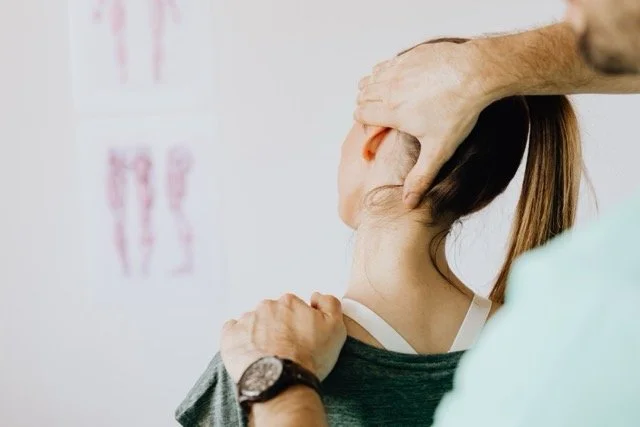
The forward-leaning posture that often develops with Parkinson's places the head in a position that changes how vestibular signals are interpreted. When the head is consistently forward and down, the inner ear is working from a different baseline than it was designed for.
Postural exercises that encourage an upright head position and open chest help restore a more natural vestibular baseline. This is a slow change, but it matters for how accurately the system functions over time.
6. Be Consistent
Vestibular rehabilitation, like all neurological training, depends on repetition. The brain learns through consistent practice. Short sessions done frequently are more effective than long sessions done occasionally. Aim for daily or near-daily movement that includes some component of balance challenge.
These strategies give you a foundation to work from. But applying them effectively, especially when symptoms fluctuate, and it's hard to know how hard to push, is where professional guidance makes a real difference.
How Rogue Physical Therapy & Wellness Supports Vestibular Balance in Parkinson's
At Rogue Physical Therapy & Wellness, supporting balance in people with Parkinson's is at the center of what we do. We understand that vestibular dysfunction in Parkinson's is a layered problem, and we approach it with the specificity it deserves.
One of the ways we support balance at Rogue Physical Therapy & Wellness is through structured balance and fall prevention programs available in person for those who want dedicated, hands-on guidance.
In-Person Training at Rogue Physical Therapy & Wellness
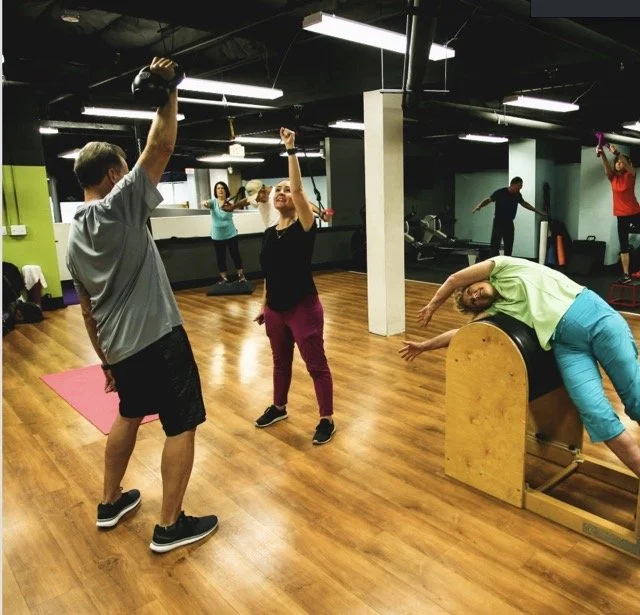
Our in-person program at Rogue Physical Therapy & Wellness is led by neurologic physical therapists who specialize in Parkinson's care. If vestibular-related balance issues are part of what you're experiencing, in-person training allows your therapist to observe how your balance responds across different conditions and make adjustments in real time.
Sessions incorporate balance training across varied surfaces and conditions, postural work, gaze stabilization principles, and amplitude-based movement, including PWR! Moves. Your therapist watches how you respond and progresses the challenge appropriately, which is especially important when vestibular training is involved because pushing too hard too fast can increase dizziness rather than reduce it.
Members also train alongside others working through similar challenges, which builds both accountability and confidence. Many people find that their willingness to move more freely in public improves after training in a group setting where they feel supported.
What carries over from the clinic into daily life is significant: steadier turns, more confidence on different surfaces, and less hesitation before transitions. These are real, practical gains that come from consistent, targeted work.
Online Training Through Rogue in Motion
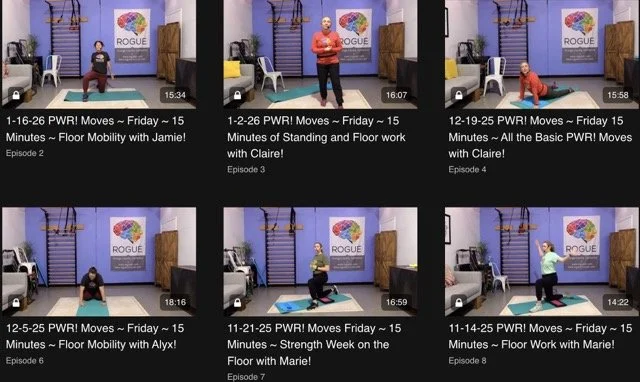
For those who live outside Orange County or prefer to train from home, Rogue in Motion brings Parkinson's-specific training directly to you through live Zoom classes and an on-demand video library.
Classes run five days a week and include balance, strength, gait, cardio, and more. All sessions are led by physical therapists who understand how Parkinson's affects movement and sensory processing. The program includes PWR! Moves-based training, so the movement principles that support vestibular function are built into your weekly routine.
The on-demand library means you can train at your best time of day, whether that's when medication is working well or when your energy is highest. Interactive Q&A sessions give you direct access to a neurologic PT, so if you have questions about dizziness, specific exercises, or how to adjust your training on a harder day, you can get answers from someone who understands Parkinson's specifically.
The flexibility of online training is especially useful when vestibular symptoms make certain days harder than others. You can scale your session to what your body is ready for without losing your routine entirely.
Both in-person and online paths are part of the same mission at Rogue Physical Therapy & Wellness: helping people with Parkinson's move with more confidence, more stability, and less fear in their daily lives.
Final Thoughts: The Vestibular System Is Trainable
Parkinson's dizziness and balance problems that connect to the vestibular system are real, they are specific, and they are not something you simply have to accept.
Understanding that the problem often isn't the inner ear itself but the brain's reduced ability to use vestibular information accurately opens up a real path forward. That path involves consistent, targeted movement, the right balance of challenges, big intentional patterns, strong postural habits, and professional support when you need it.
The vestibular system responds to practice. The brain adapts when it's given the right input, repeatedly and over time. That's not a small thing. That's the foundation of everything that gets better.
If you're noticing dizziness, instability in changing environments, or difficulty with transitions, don't wait for it to become a bigger problem. Start with the strategies here, and when you're ready for more structured support, explore what Rogue Physical Therapy & Wellness has available for you.