
Strength Training for Parkinson's: More Than Just Muscle

There's a lot of conversation about exercise and Parkinson's disease. Cardio gets talked about. Balance gets talked about. Walking programs, boxing classes, cycling, all of it comes up regularly when people ask what they should be doing to manage their symptoms.
But strength training? It often gets pushed to the back of the list. Some people assume it's only for athletes or younger adults. Others aren't sure where to begin or whether it's even safe with Parkinson's. And some simply don't realize how directly muscle strength relates to the things they're already struggling with, like getting up from a chair, walking steadily, or maintaining an upright posture throughout the day.
Here's what's worth knowing: strength training is NOT optional when it comes to managing Parkinson's well. In fact, it's one of the most practical and impactful things a person with Parkinson's can do, and the benefits go well beyond just building muscle.
This blog explains why muscle weakness happens with Parkinson's, what it looks like in daily life, and what you can do about it, starting today.
What's Really Behind the Muscle Weakness in Parkinson's

To understand why strength training matters so much, it helps first to understand what Parkinson's does to the muscles and the systems that control them.
Parkinson's disease reduces the brain's production of dopamine, the chemical that helps the nervous system send clear, efficient signals to the muscles. When those signals slow down or become inconsistent, muscle activation changes. Movements become smaller, slower, and harder to initiate. The body starts doing less, and when the body does less, the muscles that support posture, walking, and daily tasks begin to weaken over time.
There's also a secondary effect worth noting. Many people with Parkinson's naturally reduce their activity level as symptoms progress. They move less because movement feels harder. But less movement leads to less muscle use, and less muscle use accelerates the very weakness that made movement difficult in the first place. It's a cycle that compounds quietly over months and years if it's not actively interrupted.
On top of that, Parkinson's affects the body's ability to generate force quickly. This matters more than it might sound. Fast force production is what you use when you catch yourself from a stumble, push up from a low chair, or take a quick step to one side. When that capacity declines, the risk of falls increases, and the ability to recover from a loss of balance decreases.
Strength training directly addresses all three of these issues: it rebuilds the muscle capacity that's been lost, it breaks the cycle of reduced activity and increasing weakness, and it trains the neuromuscular system to generate force more effectively.
Now let's look at what muscle weakness actually feels like when you're living with it.
When Simple Tasks Start Feeling Heavy: Muscle Weakness and Parkinson's
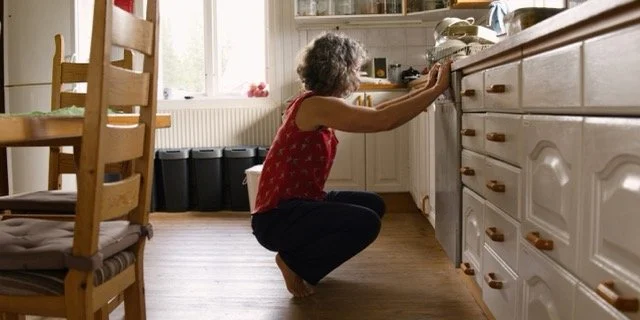
Muscle weakness in Parkinson's doesn't usually announce itself all at once. It tends to show up gradually, through small changes that are easy to chalk up to aging or a rough week. But over time, the pattern becomes hard to ignore.
Here are some of the most common ways it shows up:
Difficulty getting up from a low chair or sofa without pushing off with both hands or needing assistance
Shorter, shuffling steps that feel like the legs aren't lifting fully off the ground
Trouble on stairs, especially going down, where the legs feel unreliable
Stooped posture that gets worse as the day goes on, and the trunk muscles fatigue
Weakened grip that makes opening jars, carrying bags, or holding utensils more difficult
Reduced arm swing when walking, which affects both balance and walking speed
Fatigue that arrives earlier in the day than it used to, even after light activity
Difficulty turning over in bed or repositioning during the night
A sense that the legs feel heavy or that the body has to work harder than it should for basic tasks
Slower recovery after a stumble, because the muscles aren't responding fast enough to catch the fall
These experiences are not just frustrating in the moment. They change how freely a person moves through their day and how much they feel able to participate in the activities they care about. And when someone starts avoiding certain movements because they feel too hard or too risky, the weakness tends to deepen further.
The encouraging news is that strength is one of the most trainable physical qualities, even in the context of Parkinson's disease. The body responds to resistance, and the nervous system adapts when it's given the right input consistently. That's exactly what we'll cover next.
Feeling Weaker With Parkinson's? Here's What You Can Actually Do
Strength training for Parkinson's doesn't mean lifting heavy weights in a gym. It means giving your muscles the right kind of challenge, regularly and progressively, so they stay capable of doing the things that matter in daily life.
Here's where to start.
1. Focus on Functional Strength First
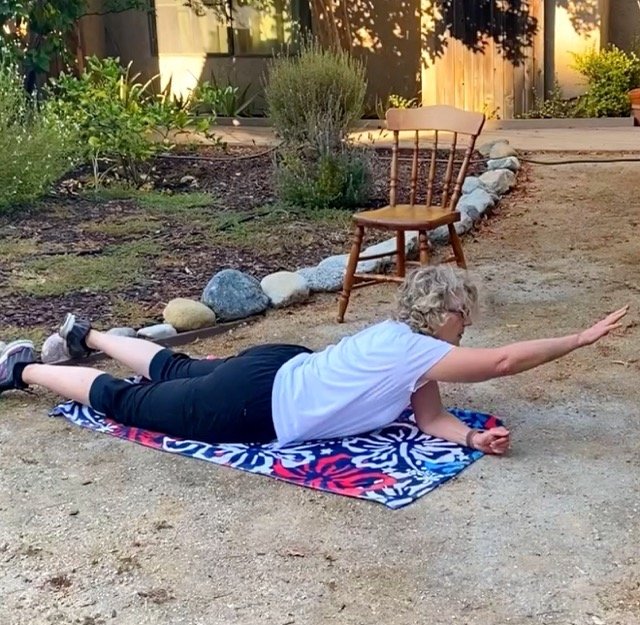
The most useful strength work for Parkinson's targets the movements you actually need: standing up, sitting down, stepping, reaching, turning, and carrying. These are called functional movements, and training them directly transfers to daily life more than isolated exercises like bicep curls or leg extensions.
Squats, sit-to-stand exercises, step-ups, and standing hip work are all examples of functional strength training that build the exact muscle groups Parkinson's tends to weaken first: the legs, hips, glutes, and trunk.
2. Train the Muscles That Support Posture
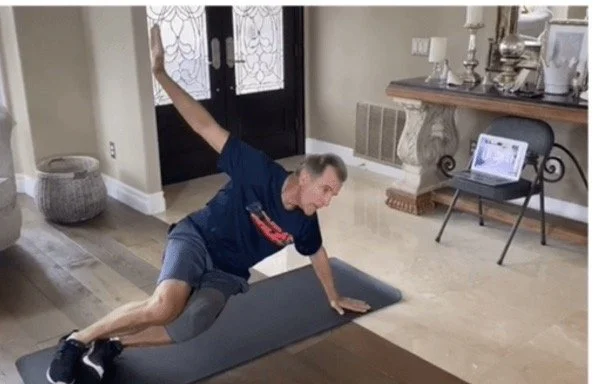
Parkinson's has a strong tendency to pull the body forward and inward. The chest tightens, the shoulders round, and the upper back weakens. Over time, this forward posture changes how the whole body moves and makes balance harder.
Strengthening the muscles of the upper back, the muscles between the shoulder blades, and the deep muscles of the trunk helps counteract this pattern. Rows, pulling movements, and extension-based exercises are particularly useful here. Even small improvements in posture strength can make walking, turning, and standing feel noticeably more stable.
3. Include Amplitude in Your Strength Work
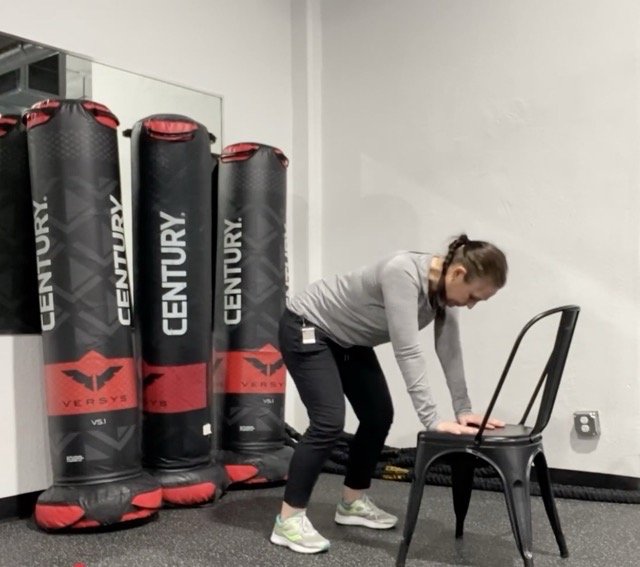
One of the most important principles in Parkinson's exercise is amplitude, which means practicing movements that are bigger and more deliberate than what feels natural. This is especially relevant in strength training because Parkinson's causes the brain to underestimate how much effort and range of motion is needed.
When you train with a full range of motion, reaching all the way, stepping as far as you can, sitting down slowly and fully, you're not just building muscle. You're also retraining the brain's movement signals to recognize bigger movements as normal. This is the foundation behind foundational Parkinson's movement strategies like PWR! Moves, which combines amplitude-based principles with the specific movement patterns people with Parkinson's use most.
PWR! Moves focuses on four core patterns: rising from the floor, shifting weight, stepping, and reaching. These are the same movements that functional strength training supports. Pairing strength work with amplitude-based movement practice gives the body a more complete foundation to build on.
4. Use Resistance Progressively
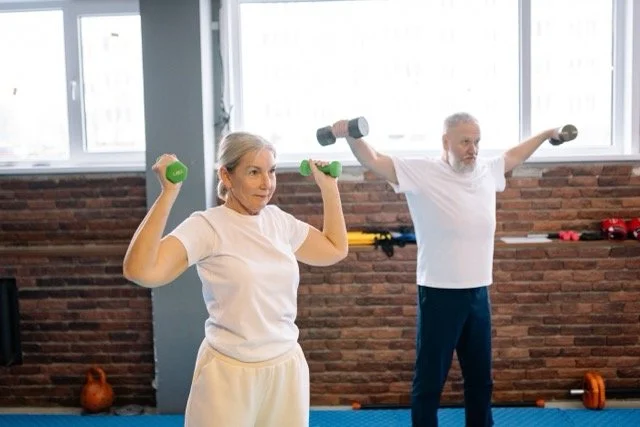
The body only gets stronger when it's challenged enough to adapt. That means the resistance you use in training needs to increase gradually over time. This doesn't have to mean heavy weights. Resistance bands, light dumbbells, and body weight are all effective tools, as long as the challenge is enough to make the muscles work.
A good rule of thumb: if the last two or three repetitions of an exercise feel easy, it's time to add a little more resistance or do a few more repetitions. Progression is what turns exercise into actual strength gain.
5. Don't Skip the Lower Body
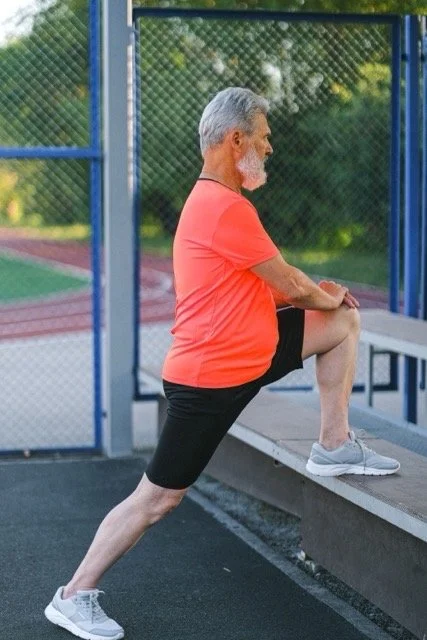
The legs and hips do the most work in the movements Parkinson's affects most: walking, standing, transferring, and stair climbing. Lower body strength is also directly tied to fall risk. Stronger legs mean faster responses when balance is threatened and more control when navigating uneven surfaces.
Exercises like sit-to-stand from a chair, step-ups onto a low surface, mini squats with support, and standing hip abduction all target the muscles most critical for safe, independent movement.
6. Pair Strength With Cardio, Not Instead of It
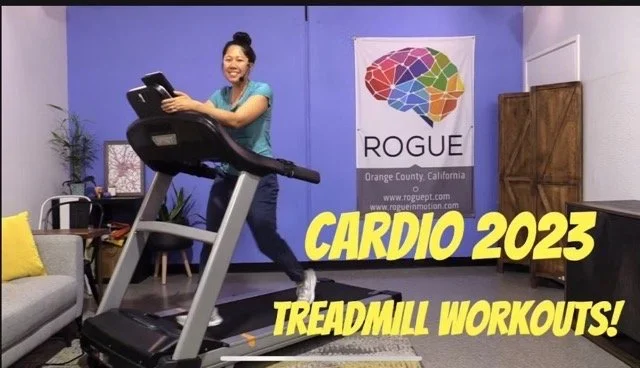
Strength training and cardio work best together, not in competition. Cardio supports heart health, endurance, and neuroplasticity. Strength training supports muscle force, posture, and task performance. Both are necessary for a well-rounded Parkinson's exercise program.
If you're already doing cardio-based Parkinson's exercise options and want to add strength work, two to three strength sessions per week alongside your cardio routine is a practical and sustainable starting point.
7. Be Consistent Above Everything Else
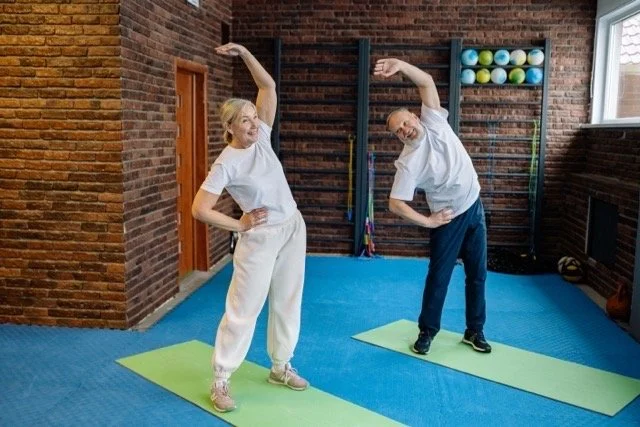
Strength gained through training is not permanent without continued practice. The muscles need regular challenge to maintain what they've built. Two to three sessions per week are enough to see and sustain real progress, as long as those sessions happen reliably over weeks and months, not just occasionally.
These principles give you a strong starting point. But putting them into practice consistently, especially when symptoms vary from day to day, is where having the right program and the right support makes a real difference.
How Rogue Physical Therapy & Wellness Supports Strength Training for Parkinson's
At Rogue Physical Therapy & Wellness, strength training for Parkinson's is not an afterthought. It's built into how we approach movement at every level.
We offer two ways to train, depending on what fits your life.
In-Person Training at Rogue Physical Therapy & Wellness
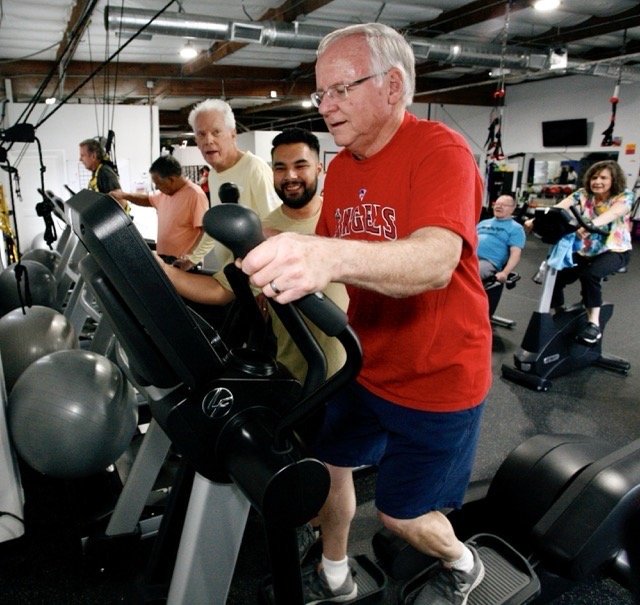
Our in-person program in Orange County is led by neurologic physical therapists who specialize in Parkinson's care. Strength training is woven into the session structure alongside balance, gait, posture, and amplitude work so that everything supports everything else.
Training in person means your therapist can watch how you move, identify where weakness is affecting your function most, and adjust your program accordingly. If your legs are giving out on the stairs or your posture is collapsing by midday, that information shapes what you work on in the gym.
Members benefit from:
Guidance from Parkinson's-specialized neurologic physical therapists
Strength sessions that target posture, lower body, trunk, and functional movement
Real-time feedback and corrections during exercises
A structured weekly schedule with approximately 40 classes per week across multiple levels
A program that adjusts as your strength and symptoms change
The community aspect of in-person training also matters. Working alongside others who understand what you're going through makes it easier to show up consistently, and consistency is what turns strength training from a good idea into a real result.
Many members notice the carry-over into daily life within the first few weeks: getting off the couch with less effort, climbing stairs with more confidence, and feeling less fatigued by the end of the day. Those are the kinds of changes that make the work feel worth it.
Online Training Through Rogue in Motion
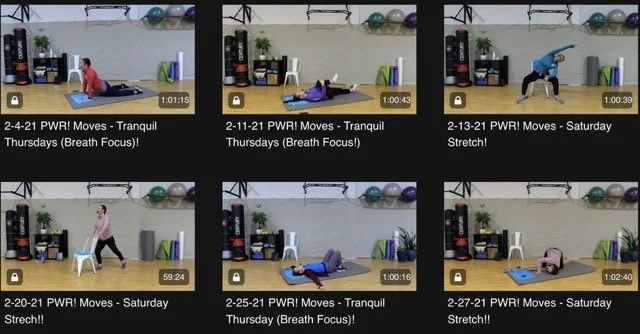
For those who live outside Orange County or prefer to train from home, Rogue in Motion brings Parkinson's-specific strength training directly to you through live Zoom classes and an on-demand video library.
Classes run five days a week and include strength, balance, gait, cardio, and more. All sessions are led by physical therapists who build strength work around the realities of Parkinson's, including amplitude principles and PWR! Moves-based training. You're not following a generic fitness class. You're following a program designed around the specific ways Parkinson's affects movement and muscle function.
Here's what Rogue in Motion members have access to:
Live Zoom classes five days a week across multiple class types
Over 3,000 on-demand videos for Parkinson's-specific training
Strength classes that target functional movement, posture, and lower body stability
Interactive Q&A sessions with a neurologic PT for personalized guidance
A supportive community that helps you stay consistent
The flexibility of online training means you can schedule strength sessions around your best medication window and your energy levels. On days when symptoms are more noticeable, you can choose a lighter session. On stronger days, you can push a little further. The library is broad enough to always find something that fits where you are that day.
Both in-person and online training at Rogue Physical Therapy & Wellness share the same goal: helping people with Parkinson's build the strength they need to move through daily life with more confidence, more independence, and less effort.
Final Thoughts: Strength Is Worth Building
Muscle weakness is one of the most practical problems to address in Parkinson's, and strength training is one of the most direct ways to address it. It rebuilds what Parkinson's tends to take away: the ability to stand up easily, walk steadily, hold your posture, and recover when something unexpected happens.
You don't need a complicated program or a full gym to get started. You need movements that challenge your muscles, done consistently over time, with enough progression to keep your body adapting.
Start with the basics: functional lower body work, postural strength, and amplitude-based movement. Build from there. And if you want a program that takes the guesswork out of it and gives you expert support along the way, Rogue Physical Therapy & Wellness has a path for you, whether that's in person in Orange County or online through Rogue in Motion.
Strength is not something you either have or don't have. It's something you build, one session at a time.