
Why Parkinson’s Specific Exercise Works Better Than Generic Fitness
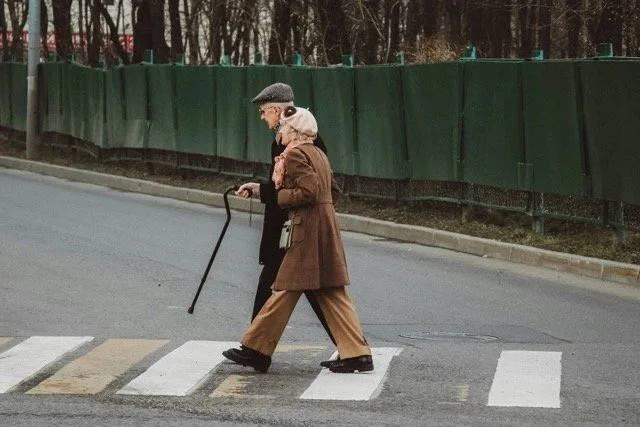
When someone is diagnosed with Parkinson’s disease, one of the first recommendations they often hear is simple: exercise. Doctors, therapists, and support groups frequently emphasize the importance of staying active. Movement helps support strength, balance, flexibility, and overall health.
But a question often follows soon after.
Is any type of exercise good enough, or does Parkinson’s require something more specific?
Many people start with general fitness routines like walking, stretching, or following a workout video online. These activities are helpful for overall health. However, Parkinson’s affects movement in ways that typical workouts are not designed to address.
That difference is where Parkinson’s specific exercise becomes important.
Specialized exercise programs are designed around the unique movement challenges people with Parkinson’s face. Instead of focusing only on general fitness, these programs train the nervous system in ways that directly support walking, posture, balance, and coordination.
To understand why this approach matters, it helps to first look at the problem many people face when relying only on general exercise.
Generic Fitness Was Never Designed for Parkinson’s

General fitness programs are created for the average person without a neurological condition. They usually focus on goals such as burning calories, building muscle, or improving endurance.
Those are valuable goals. But Parkinson’s changes how the brain communicates with the body, especially in movement size, speed, and coordination.
Because of that, a workout that works well for someone without Parkinson’s may not address the challenges someone with Parkinson’s is trying to overcome.
For example, a typical gym workout might include light weights, cycling, or stretching. These activities support general health, but they may not directly train the movement patterns that become more difficult with Parkinson’s.
Many people notice that even when they stay active, certain issues persist in daily life. Walking may feel smaller. Turning may feel slower. Posture may gradually shift forward.
That experience can be frustrating.
The effort is there, but the results do not always match the effort.
This happens because Parkinson’s requires targeted exercise that teaches the brain and body how to move more effectively. Without that targeted approach, the nervous system does not receive the type of training it needs.
And when the right signals are missing, certain symptoms tend to appear more often.
Let’s look at what those symptoms may look like in everyday life.
How This Gap Shows Up in Everyday Movement

When exercise does not specifically target Parkinson’s movement patterns, people may notice gradual changes in how their body moves throughout the day.
Some of the most common signs include:
• Smaller steps when walking
• Slower movement when starting or stopping
• Difficulty turning or changing direction
• Reduced arm swing while walking
• A forward-leaning posture
• Reduced balance confidence
• Stiffness that returns quickly after activity
• Increased effort during everyday tasks
These changes do not mean someone is doing exercise incorrectly.
In many cases, it simply means the exercise routine is not designed to train the movement patterns Parkinson’s affects most.
Parkinson’s alters how the brain sends signals to muscles. Because of this, movement often becomes smaller and slower over time. Generic workouts rarely address that specific issue.
Instead, they train general fitness qualities such as endurance and strength.
While those qualities matter, they do not always translate into better walking, steadier balance, or smoother daily movement.
That is why many neurologic physical therapists recommend targeted exercise for Parkinson’s disease. These programs focus on training the brain and body together.
Before we explore those specialized approaches, it helps to look at the general solutions people often try first.
What Actually Helps: Moving Beyond General Exercise
There are two main ways people approach exercise after a Parkinson’s diagnosis.
The first approach involves general fitness activities. These are widely accessible and still beneficial for overall health.
The second approach involves Parkinson’s specific exercise programs designed by neurologic rehabilitation specialists.
Both can help you stay active, but they serve different purposes.
Let’s start by looking at the general solutions many people try first.
1. Where Most People Begin: General Fitness Routines

Many people begin their exercise journey with familiar activities. These include walking around the neighborhood, attending a yoga class, riding a stationary bike, or following an online workout video.
These activities help support cardiovascular health, flexibility, and muscle strength.
They can also boost mood and energy, both of which are important to living well with Parkinson’s.
For example, someone may choose to walk every morning for 30 minutes. Another person may attend a general fitness class at a local gym a few times each week.
These routines provide movement, and movement is always better than inactivity.
However, these programs are not specifically built to train the neurological movement patterns affected by Parkinson’s.
That means improvements in walking quality, posture, and balance may develop more slowly, or sometimes not at all.
Many people eventually notice that, although they are staying active, some movement challenges persist.
This realization often leads to the next step: exploring specialized exercises for Parkinson’s disease.
And this is where Parkinson’s specific exercise programs make a meaningful difference.
2. What Changes When Exercise Is Designed for Parkinson’s
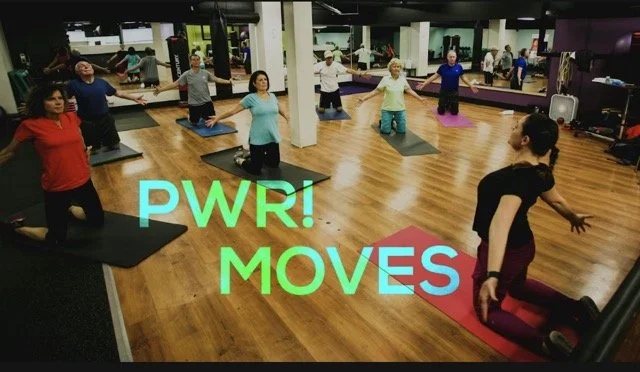
Parkinson’s specific exercise focuses on retraining how the body moves.
Instead of emphasizing only endurance or muscle strength, these programs focus on movement quality, coordination, and intentional movement patterns.
Neurologic physical therapists often guide these programs because they understand the unique movement challenges Parkinson’s creates.
Specialized training may focus on:
• Practicing larger and more controlled walking patterns
• Improving posture and body alignment
• Strengthening balance reactions
• Reinforcing coordinated arm and leg movement
• Increasing confidence when changing direction
These exercises help the nervous system practice movement patterns that support daily life.
If you would like to see an example of how Parkinson’s specific exercise is structured, you can explore our guide on PWR! Moves, a movement system developed to help people practice stronger and more intentional movement patterns during everyday activities.
Programs that use this type of targeted training help individuals move with more confidence throughout the day.
But knowing the right exercises is only one part of the process.
Consistency is what allows these improvements to build over time.
That is where structured programs can help.
In-Person Support: Guided Training with Parkinson’s Specialists
For people who prefer hands-on support, in-person training can provide structure and professional guidance.
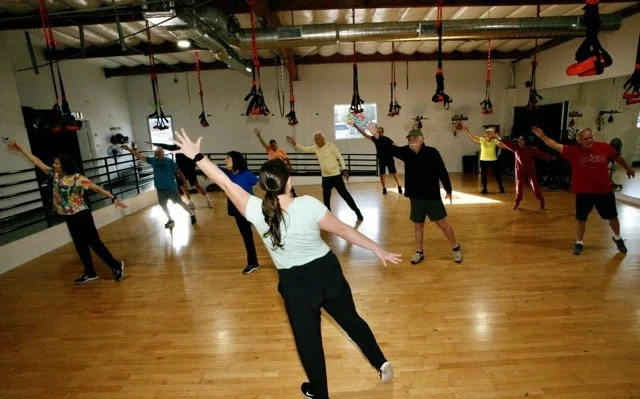
At Rogue Physical Therapy & Wellness in Orange County, neurologic physical therapists lead exercise sessions designed specifically for individuals with Parkinson’s disease.
These classes focus on movement quality, balance, strength, and coordination in a supportive group environment.
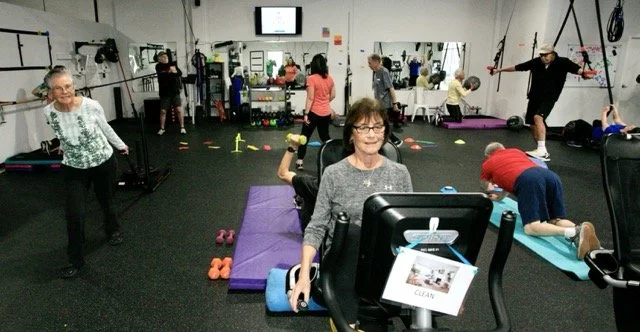
Members benefit from:
• Guidance from therapists experienced in Parkinson’s rehabilitation
• Classes that target walking, posture, and balance
• Immediate feedback during exercises
• A supportive community of people working toward similar goals
• A structured schedule that encourages consistency
Working alongside others can create motivation and accountability. Many members find that the group environment makes it easier to maintain a steady routine.
Consistency is one of the most important factors in improving movement with Parkinson’s.
When exercise becomes part of a weekly rhythm, the nervous system receives regular practice that supports mobility and confidence.
But not everyone lives close enough to attend in person. That is where online programs provide another option.
At-Home Option: Structured Parkinson’s Training You Can Follow Anywhere
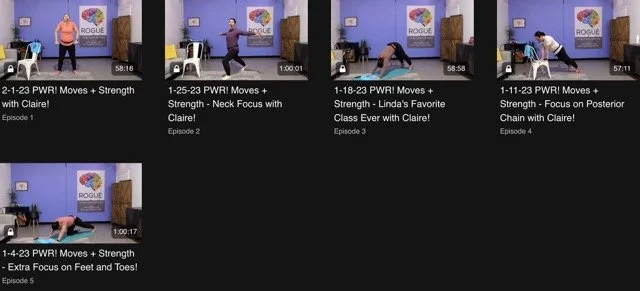
Many people with Parkinson’s prefer the flexibility of exercising at home. Travel time, transportation, or personal schedules can make attending in-person classes difficult.
To make specialized training more accessible, we created Rogue in Motion, our online Parkinson’s exercise program.
This platform brings structured training directly to your home while still following the principles of Parkinson’s-specific exercise.
Members receive access to:
• Over 3,000 follow-along training videos
• Live online classes guided by therapists
• Strength, cardio, balance, and voice training sessions
• Q&A sessions with neurologic physical therapists
• A supportive community of members
One of the biggest benefits of training online is flexibility.
You can exercise during the time of day when your energy feels best. Some people prefer mornings. Others feel their strongest later in the day, after the medication has taken effect.
With on-demand videos and scheduled classes, it's easier to maintain a routine without having to plan every workout yourself.
Whether someone chooses in-person training or online sessions, the purpose remains the same: help people with Parkinson’s move more confidently and consistently.
And when that consistency builds over time, the benefits begin to show up in everyday life.
Bringing It All Together:
Why General Workouts Fall Short for Parkinson’s
Parkinson’s disease affects how the brain communicates with the body, which changes the size, speed, and coordination of movement. Because of this, general fitness routines often miss the specific training the nervous system needs. Parkinson’s-specific exercise focuses on improving real-life movement patterns, such as walking, posture, and balance.
Specialized exercise programs are designed by professionals who understand how Parkinson’s affects mobility. These programs help retrain movement patterns through intentional practice and repetition. Over time, this targeted training can support smoother movement and greater confidence during daily activities.
What Makes an Exercise Routine Stick Over Time
A consistent exercise routine is one of the most helpful ways to support mobility with Parkinson’s. Both in-person training and online programs provide structure that makes regular exercise easier to maintain. When people follow a routine focused on Parkinson’s-specific movement patterns, improvements are more likely to carry over into everyday life.
Programs like those offered by Rogue Physical Therapy & Wellness combine clinical expertise with practical training methods. Whether someone attends classes in person or participates from home, the goal remains the same. Regular, targeted exercise helps people with Parkinson’s stay active, capable, and engaged in daily life.