
Finish Strong: Reviewing Your Parkinson’s Progress and Setting Meaningful Goals
Living with Parkinson’s isn’t just about managing symptoms from one appointment to the next. It’s about learning how to stay steady when things change, how to recognize effort even when progress feels uneven, and how to keep moving forward without burning out.
Over time, it can feel like Parkinson’s sets the pace, and you’re just trying to keep up. That’s why slowing down at the end of the year matters. A PD end-of-year reflection gives you a chance to step out of survival mode and look at the bigger picture. Because at the end of the day, Parkinson’s progress tracking is not about judging yourself or comparing one year to another. It’s about noticing what supported you, what drained you, and what you want to carry into the next season.
In this blog, we’ll talk about why progress can feel hard to measure when you’re living with Parkinson’s, how that can quietly affect motivation and confidence, and why reflection is such a powerful tool. Then we’ll walk through practical ways to review your year, set realistic goals, and build a plan that supports living well with Parkinson’s. We’ll also share how our program helps turn reflection into action with structure, guidance, and community.
The Problem: When Progress Feels Invisible

Here’s something many people don’t talk about enough. Parkinson’s progress does not always look like improvement. You might be exercising consistently, attending appointments, and staying engaged, yet still feel like things are slipping. Symptoms fluctuate. Energy varies. Some days feel steady, while others feel unexpectedly hard.
Parkinson’s also affects much more than movement. It touches sleep, mood, focus, confidence, and motivation. When sleep is disrupted, fatigue builds. When fatigue builds, exercise feels harder. When activity drops, mood often follows. Over time, this can start to feel like one long loop that’s difficult to interrupt.
Another challenge is that progress often shows up quietly. Being able to recover faster after a rough day, feeling more confident walking in public, or staying consistent with exercise for longer stretches are meaningful changes, but they’re easy to overlook. Without Parkinson’s progress tracking, these wins fade into the background.
This is where Parkinson’s wellness planning becomes essential. Reflection helps you zoom out and see patterns instead of isolated struggles. It allows you to separate what is truly changing from what simply feels different. Before talking about solutions, it helps to name how this problem often shows up in daily life.
Signs You’re Feeling Stuck: Common Symptoms of the Problem

Discouragement
You may feel frustrated even though you’re still trying. You’re showing up, but the results don’t feel obvious. When effort doesn’t seem to match outcomes, motivation can quietly fade.Inconsistency
Exercise routines become harder to maintain. Appointments get postponed. Habits that once helped start to slip.
This doesn’t mean you lack discipline. Often, it means your goals no longer match your current energy, schedule, or symptoms.
Emotional fatigue
Living with Parkinson’s can feel like carrying a long-term responsibility that never really pauses. Without moments to reflect and acknowledge effort, it’s easy to feel worn down.
Some people notice they pull back socially or feel unsure what they should even be working toward.
A sense of guilt or self-blame
Thoughts like “I should be doing more” or “I used to be better at this” can creep in. These thoughts add pressure without offering solutions.
These signs are not a reason to give up. They are signals that it’s time to pause, reflect, and reset. That reset starts with a simple, structured review of your year.
Reflecting With Purpose: A Simple Way to Review Your Year

A PD end-of-year reflection doesn’t need to be overwhelming or time-consuming. It starts with slowing down and asking clear, honest questions without judgment. Think of it as gathering information, not grading yourself.
1. Joy and Purpose
What moments stood out this year? Were there activities, people, or routines that brought a sense of meaning or enjoyment? Sometimes people realize they feel most grounded during small, everyday moments rather than big events. That awareness helps guide future priorities.
2. Movement and Physical Health
What types of exercise supported you best? Did certain classes, routines, or activities help you feel more confident or steady? Even noticing that something felt hard, but you kept showing up, is valuable information. Parkinson’s progress tracking includes effort, not just outcomes.
3. Symptoms, Medical Care, and Self-management
Did symptoms change over the year? Were there appointments you postponed or decisions you avoided because life felt busy or overwhelming? The end of the year is often a good time to plan instead of reacting later.
4. Daily life and Independence
Were there tasks that felt easier compared to last year? Were there areas where you needed more support? Think about tools, routines, or strategies that helped you stay independent.
5. Emotional Well-being and Social Connection
What emotions showed up most often? Joy, frustration, hope, sadness? Living with Parkinson’s is not emotionally neutral, and acknowledging the full range matters. Did you feel connected to others? Were there relationships or activities you wish you had leaned into more?
Once reflection brings clarity, the next step is deciding what to do with that information. That’s where thoughtful goal setting comes in.
Parkinson’s Goal Setting: Making Plans That Actually Work

The most effective Parkinson’s goal setting is focused and flexible. You don’t need a long list of goals to make progress. In fact, too many goals often create pressure and make follow-through harder.
Choosing one to three priorities is usually enough. These should be areas that truly matter to you right now, not what you think you “should” focus on.
Clear goals work better than vague intentions. For example:
Exercising three days per week instead of saying “I want to move more”
Scheduling overdue medical follow-ups early in the year
Creating a simple bedtime routine to support sleep
Setting aside one weekly time to connect socially
Planning meals to reduce fatigue and decision-making
Progress tracking supports these goals. This does not need to be complicated. A calendar note, a short weekly check-in, or even reflecting on how you feel after a month can help you notice patterns. Tracking allows you to adjust goals instead of abandoning them.
It’s also helpful to think about support. Ask yourself what will help this goal succeed. That might be accountability, professional guidance, reminders, or a supportive environment at home.
With goals in place, momentum builds. Still, many people benefit from added structure and encouragement. That’s where having a program designed specifically for Parkinson’s can make a difference.
Your Path Forward: Support Beyond Doing It Alone
Managing Parkinson’s well means looking beyond symptoms alone. Exercise, medical care, emotional health, daily routines, and social connections all work together. Parkinson’s wellness planning is most effective when these areas support each other instead of competing for energy.
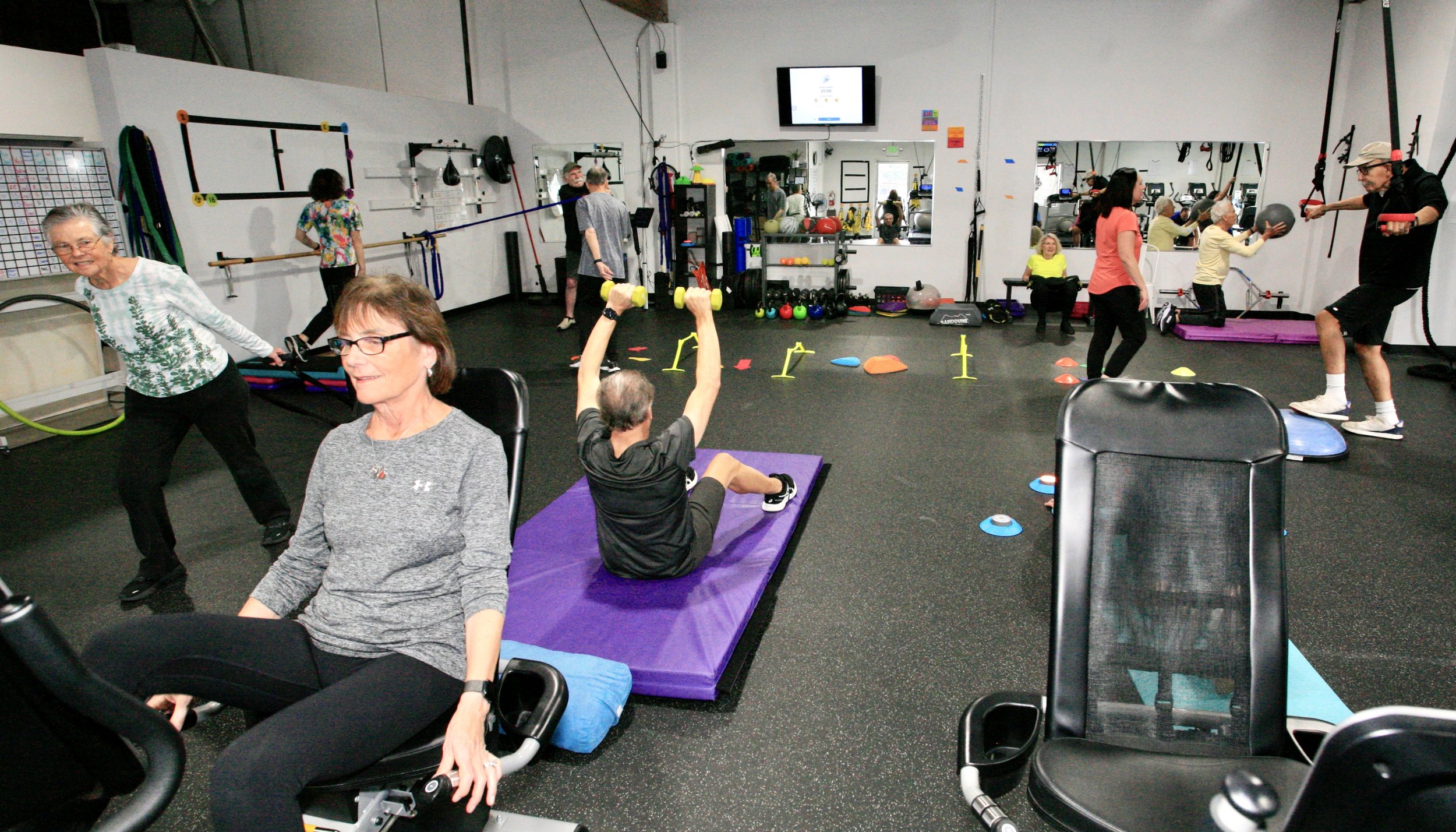
1. Our In-Person Gym in Orange County, California
Rogue Physical Therapy and Wellness in Orange County, California, programs are designed to help people take what research supports and turn it into daily habits that are realistic and sustainable.
We help members reflect across multiple areas of life, not just physical symptoms. This approach makes Parkinson’s progress tracking clearer and more meaningful.
Exercise classes are led by physical therapists with Parkinson’s expertise. Classes focus on strength, balance, endurance, and skill-based movement. Members are encouraged to meet themselves where they are while still working toward improvement.
Consistency is emphasized over perfection. Life happens. Health changes. Setbacks occur. What matters is knowing how to restart and keep going without shame.
Community plays a key role. Exercising and reflecting alongside others who understand Parkinson’s creates connection and motivation. Social engagement supports brain health and emotional well-being.
2. Our Online Program: Rogue in Motion
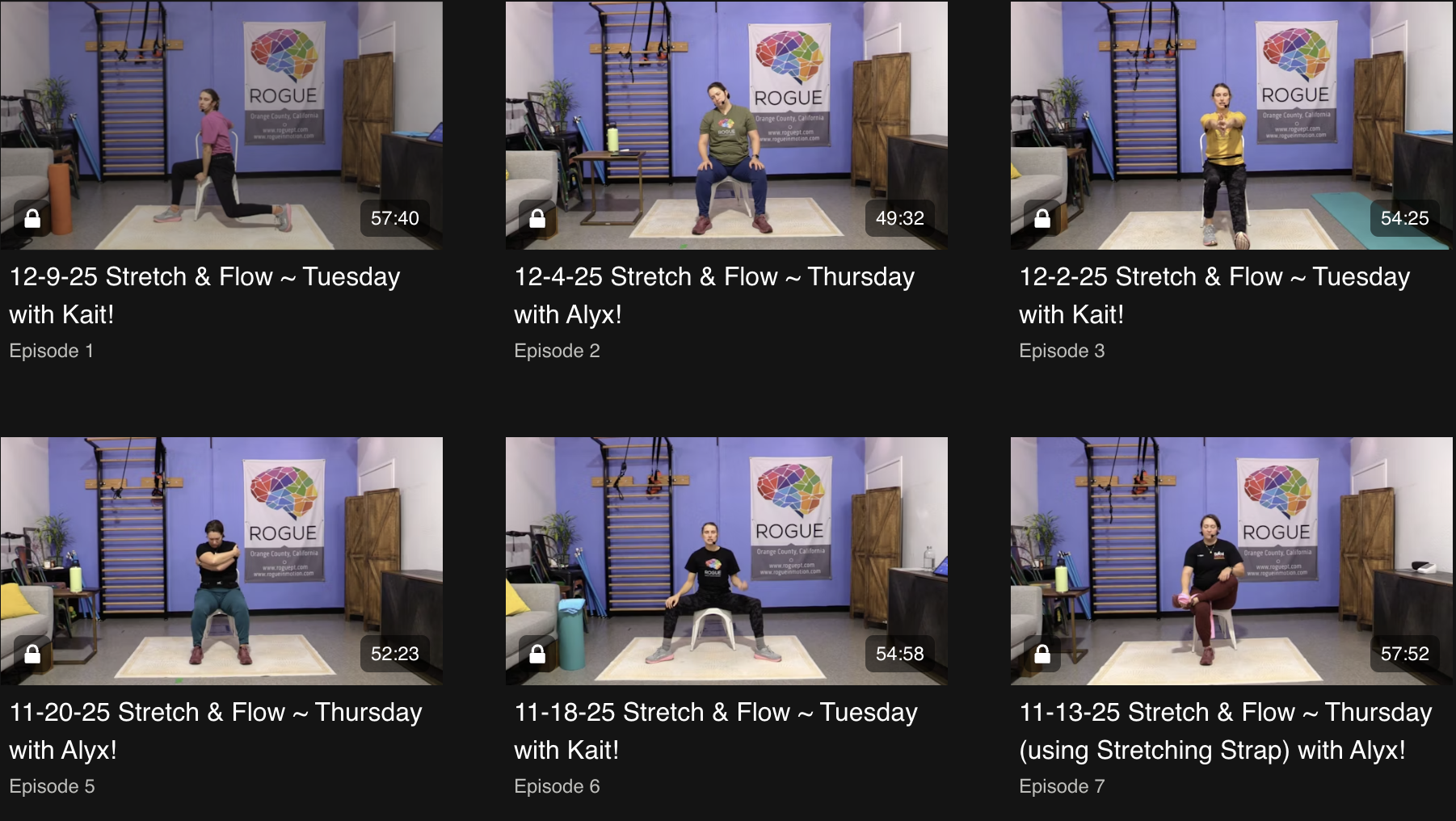
For those who cannot attend in person, our Rogue in Motion online membership provides live classes five days a week and access to a large on-demand library. This flexibility supports living well with Parkinson’s regardless of location or schedule.
With the right structure, reflection turns into action, and goals become part of daily life instead of another source of pressure.
How Our Program Supports Rest, Recovery, and Overall Wellness
Our approach is designed to support not just movement, but the full rhythm of your day, including rest and recovery. Quality sleep, steady energy, and emotional balance are closely connected, especially when living with Parkinson’s.
Purposeful Movement
Our aerobic and skill-based classes help your body stay active during the day, which supports natural sleep-wake cycles. Regular movement can ease stiffness, improve circulation, and make it easier for your body to settle at night.Nervous System Support
Calming practices such as guided relaxation and brief mindfulness moments are built into many classes. These moments help quiet the nervous system, which can reduce restlessness and make it easier to unwind in the evening.Daily Structure That Helps You Stay Consistent
Having scheduled class times creates a gentle routine. That structure encourages daytime activity and supports more predictable patterns of rest and recovery.Whole-Person Guidance
We help members understand how exercise, nutrition, and stress management work together. When these pieces support each other, sleep and overall brain health often improve as a result.Community That Lowers Stress
Feeling connected matters. Being part of a supportive group reduces stress, and lower stress often leads to better rest. Many members share that feeling encouraged and engaged during the day carries over into improved sleep at night.
For those who are unable to attend in person, our online membership offers the same thoughtful support from home. From guided movement and speech-focused sessions to educational webinars on topics like sleep and Parkinson’s, we focus on building small, repeatable habits that create lasting change.
As an online member, you receive:
On-demand access to a large and growing library of Parkinson’s-specific exercise videos that you can use anytime.
Live Zoom classes are offered five days a week, allowing you to move alongside others and stay connected to the Rogue in Motion community.
Interactive Q&A sessions with a physical therapist who specializes in Parkinson’s, offering practical guidance on exercise, nutrition, and wellness.
Our approach blends movement, mindfulness, and education in a way that feels natural and sustainable. Whether you join us in person or online, the goal stays the same: steady progress, meaningful connection, and routines that support both your body and your mind.
Final Thoughts: Finishing Strong Looks Different for Everyone
Finishing the year strong does not mean pushing harder or doing more. It means recognizing effort, learning from experience, and choosing goals that support your life as it is now.
Parkinson’s progress tracking and PD end-of-year reflection help turn uncertainty into clarity. Thoughtful goal setting helps you move forward with intention instead of pressure.
Living well with Parkinson’s is built on consistency, compassion, and support.
If you’d like guidance through this reflection and planning process, watch our YouTube video “Finish Strong: Reviewing Your Parkinson’s Progress and Setting Meaningful Goals.”
In the video, we walk through a guided reflection and share practical examples to help you plan the year with confidence and support.
You are not behind. You are still building. One thoughtful step at a time truly is enough.