
Parkinson's Fall Prevention Exercises: How to Reduce Your Fall Risk

If you or someone you love has Parkinson's, you've probably noticed that moving through daily life takes a little more thought than it used to. Getting up from a chair, walking across the room, stepping off a curb - these actions feel different now. And one of the biggest concerns for most people is this: falling.
Falls are one of the most common and most serious complications for people living with Parkinson's. They happen not because of carelessness, but because the disease changes how the brain communicates with the body. Balance gets harder to maintain. Reactions slow down. Steps become shorter and less steady.
But here's something important: exercise is one of the most effective tools we have for reducing fall risk in Parkinson's disease. Not just any exercise - specific, targeted movements that work on balance, strength, and body awareness. This blog breaks down what's happening, why it matters, and what you can actually do about it.
Why Parkinson's Raises Fall Risk
Parkinson's disease is a progressive neurological condition. It reduces the brain's ability to produce dopamine, the chemical that helps control smooth and coordinated movement. When dopamine levels drop, movement becomes harder to control. The body gets stiff, reactions slow down, and the automatic adjustments your brain normally makes to keep you upright become unreliable.
This is why falls in Parkinson's are different from the kind of fall a healthy person might have after slipping on a wet floor. With Parkinson's, the nervous system itself is less equipped to catch you when your balance shifts. A small uneven surface, a quick turn, or even just standing up too fast can be enough to cause a fall.
What makes this especially tricky is that many of these changes happen gradually. A person might start to shuffle their feet without realizing it. They might begin avoiding certain activities - climbing stairs, walking in crowded places, going out at night - because those situations feel unsafe. Before long, that fear of falling starts limiting daily life in ways that go far beyond the physical risk.
And unfortunately, reduced activity often makes things worse. When the body moves less, muscles weaken, balance deteriorates further, and the cycle continues.
The good news is that this cycle can be interrupted. That's exactly what Parkinson's fall prevention exercises are designed to do.
How Increased Fall Risk Shows Up
It's helpful to know what to look for, especially in the earlier stages, when the changes are still small but worth addressing. Fall risk in Parkinson's doesn't always announce itself with a dramatic stumble. It often shows up in subtle patterns that build over time.
Here are some of the signs that fall risk may be increasing:
Shuffling steps or a reduced stride length - Instead of lifting their feet clearly, a person starts sliding them forward. This makes it easy to catch a foot on carpet, cracks, or uneven ground.
Freezing of gait - The feet seem to "stick" to the floor, especially when starting to walk, turning, or approaching a doorway.
Difficulty with turning - Turning around requires multiple small steps and more effort. Quick pivots become difficult or risky.
Postural instability - The body leans slightly forward, making it harder to catch balance when pushed or when the surface changes.
Reduced arm swing - Arms that don't swing naturally during walking contribute to poor balance and a less stable stride.
Slow reaction time - When balance shifts unexpectedly, the body doesn't respond fast enough to prevent a fall.
Hesitation at transitions - Getting up from a chair, stepping out of a vehicle, or going from a carpet to a hard floor all become moments of hesitation or unsteadiness.
Fear of falling itself - Once a person has fallen, or even come close, fear begins to change how they move. They take smaller steps, hold onto walls more often, and avoid activities they used to enjoy.
If you recognize several of these patterns, it doesn't mean a fall is inevitable. But it does mean the time to act is now, before a fall happens and before activity restriction becomes the default.
So what can actually be done about it? Let's talk about solutions.
Exercises That Put You Back in Control
General Exercises That Help - Even Without a Program
You don't need to wait for a formal program to start working on fall prevention. There are well-researched exercises and habits that people with Parkinson's can begin at home or with minimal equipment. Here's what the research points to:
1. Balance Training
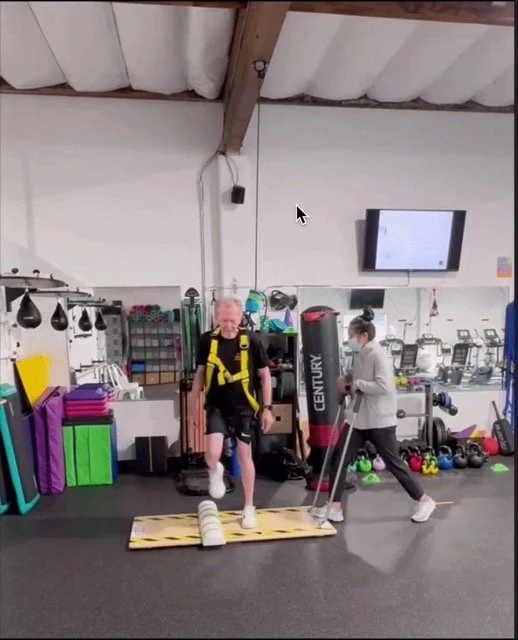
This is the most direct way to reduce fall risk. Balance exercises train the body to respond to shifts in weight and changes in surface. Examples include:
Standing on one foot (hold a sturdy surface for safety)
Weight shifting from side to side while standing
Heel-to-toe walking along a straight line
Standing up from a chair without using your hands (if possible)
Reaching forward or sideways while standing
The key with balance training is to practice at the edge of your stability, meaning you should feel challenged but still safe. That challenge is what drives improvement.
2. Strength Training
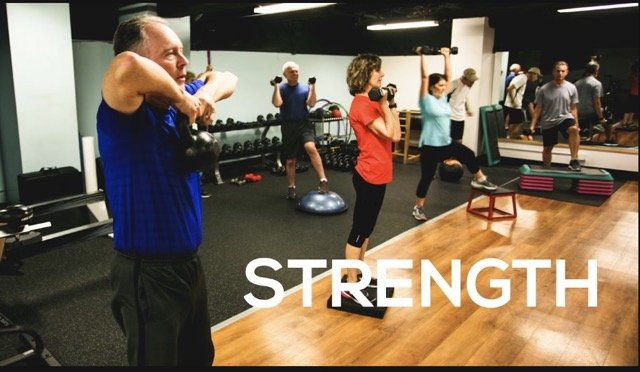
Weak legs and a weak core are major contributors to falls. Strength exercises that target the hips, thighs, calves, and core give the body a better foundation when balance is challenged.
Effective options include:
Sit-to-stand repetitions from a chair
Mini squats while holding a counter
Calf raises
Step-ups on a low step
Core engagement exercises like seated trunk rotation
3. Gait Training
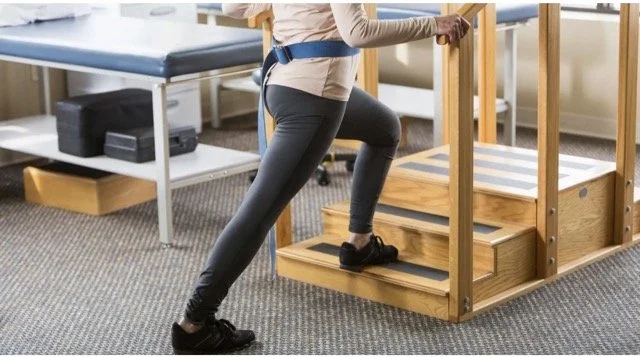
People with Parkinson's tend to walk with shorter, faster steps - a pattern that increases fall risk. Gait training encourages bigger, more deliberate steps. Helpful strategies include:
Intentionally taking large, exaggerated steps
Marching in place with high knee lifts
Counting steps out loud or using a metronome to maintain rhythm
Practicing walking in a straight line with heel-strike landing
These big movement patterns are central to approaches like PWR! Moves, which uses amplitude-based training to retrain the nervous system for larger, more controlled movements.
4. Flexibility and Mobility Work
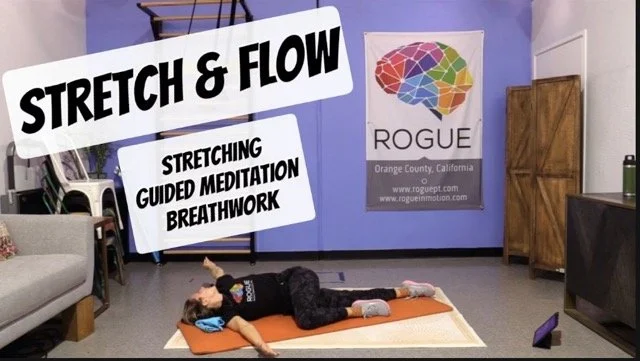
Stiffness in the ankles, hips, and trunk limits how well the body can adjust during movement. Gentle stretching and mobility exercises - such as ankle circles, hip flexor stretches, and thoracic rotation - help restore range of motion and reduce the rigidity that contributes to unstable movement.
5. Tai Chi and Dance
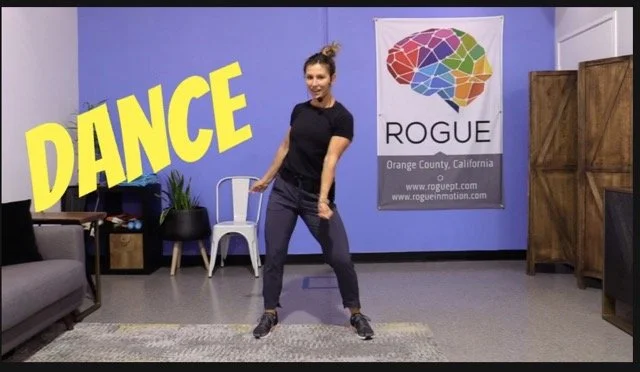
Both Tai Chi and dance have been studied specifically in Parkinson's and have shown meaningful reductions in fall frequency. They work on balance, weight shifting, coordination, and spatial awareness simultaneously. They're also enjoyable, which helps with long-term consistency.
6. Dual-Task Practice
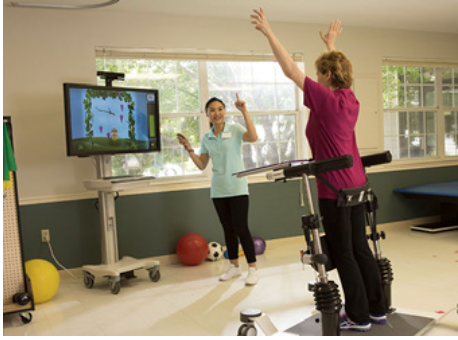
Many falls happen when a person is doing two things at once - like talking while walking, or carrying something while navigating a tricky surface. Practicing dual-task activities, like walking while counting backwards or carrying a light object while stepping over obstacles, helps train the brain to handle divided attention more safely.
7. Environmental and Behavioral Adjustments
While this isn't an exercise, it's worth mentioning: removing rugs, improving lighting, wearing supportive footwear, and using assistive devices when needed are practical steps that reduce fall risk in the home. Exercise addresses the body's ability to recover from balance challenges. Environmental adjustments reduce the number of challenges in the first place.
These strategies work. But applying them consistently, safely, and in the right combination takes time and knowledge. That's where having structured support makes a real difference. Let's talk about how Rogue Physical Therapy & Wellness brings all of this together.
How Rogue Physical Therapy & Wellness Supports Your Fall Prevention
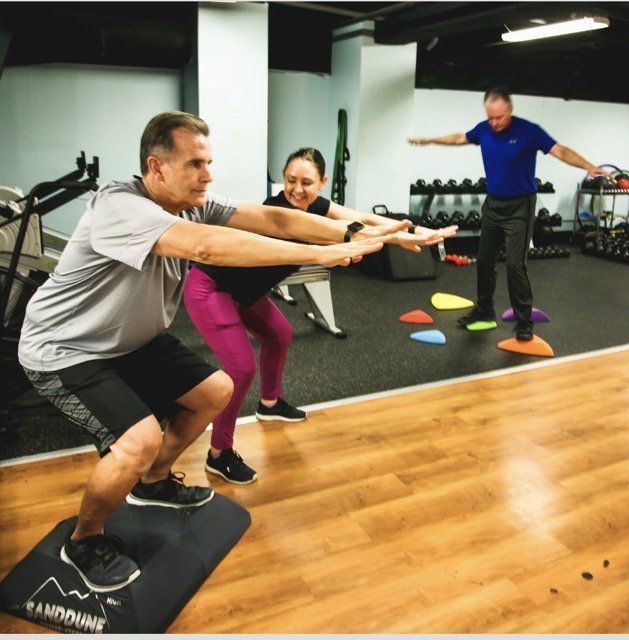
There's a big difference between knowing what to do and actually doing it in a way that sticks. Managing fall risk is not a one-week project. It requires ongoing practice, proper guidance, and a program designed around how Parkinson's actually affects the body. That's exactly what we focus on at Rogue Physical Therapy & Wellness.
Whether you're newly diagnosed or you've been living with Parkinson's for years, we have options built specifically for your needs. And if you want to start with a full picture of your current risk level, you can take advantage of our structured balance and fall prevention programs to understand where you stand and what to work on.
Here's how we support people with Parkinson's:
In-Person Training at Rogue Physical Therapy & Wellness
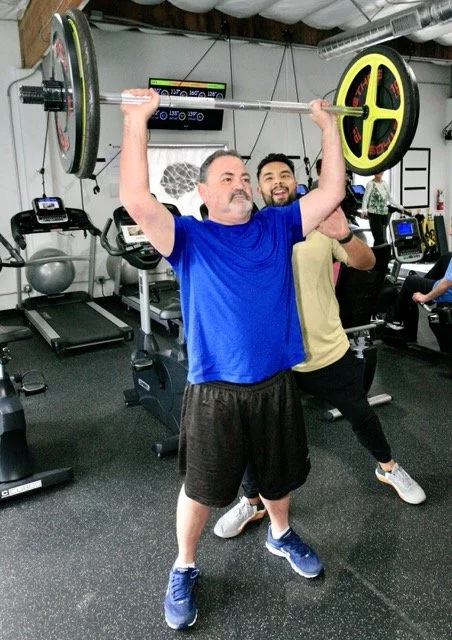
Our in-person program at Rogue Physical Therapy & Wellness is led by neurologic physical therapists who specialize in Parkinson's. The sessions are designed to work on the specific physical challenges that raise fall risk: balance instability, reduced stride length, postural dysfunction, and slowed reaction time. You're not following a generic gym routine. You're training with people who understand the neurological side of what you're dealing with.
Members who train in person benefit from:
Real-time feedback and corrections from a Parkinson's-specialized PT
Sessions that target balance, strength, gait quality, and mobility
A structured weekly schedule with classes at multiple levels
A supportive community of people going through the same experience
Access to movement protocols like PWR! Moves, which uses large amplitude exercises shown to improve motor function in Parkinson's
There's something about training in person alongside others who understand what you're facing. It builds confidence not just in your body, but in your ability to keep going. And that confidence carries over into daily life.
Online Training Through Rogue in Motion
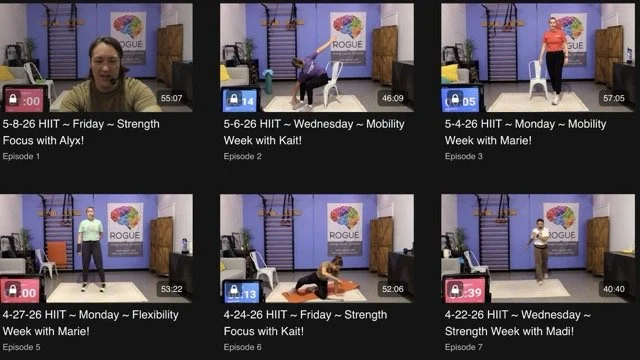
If in-person isn't an option for you, whether because of location, transportation, or schedule, our online program, Rogue in Motion, brings the same Parkinson's-focused training directly to your home.
Rogue in Motion includes:
Live Zoom classes five days a week led by neurologic PTs
A library of over 3,000 on-demand workout videos for every level
Classes focused on balance, strength, gait, cardio, and mobility
Interactive Q&A sessions with a neurologic physical therapist
A community of members who keep each other accountable
One of the biggest advantages of training from home is that it removes the barriers that often lead to skipping sessions. You don't have to drive anywhere or find parking. The classes are already planned for you. You just show up and move.
Consistency is everything when it comes to fall prevention. The exercises only work if you actually do them, week after week. Having a program that fits your life makes that consistency achievable.
Both our in-person and online options are part of the same company, Rogue Physical Therapy & Wellness. The goal is the same regardless of which path you choose: to help you move with more confidence, stay safer on your feet, and protect the independence that matters most to you.
Final Thoughts: Movement Is the Best Protection
Falls are one of the most serious risks for people with Parkinson's, but they are not inevitable. The right exercises, done consistently, can improve balance, strengthen the muscles that protect you, and retrain your nervous system to respond better when your footing is challenged.
You don't need to do everything at once. Start with balance work and seated strength exercises. Add gait training once those feel manageable. Focus on consistency over intensity. Even three to four days of intentional movement each week can make a measurable difference over time.
And if you want expert guidance tailored specifically to Parkinson's, we're here. Whether you join us in person or from your living room, our programs are built around helping you stay active, stay upright, and stay in control of your daily life.