
Build Endurance With Parkinson's: The Safe and Practical Way
Ask most people what endurance means, and they'll picture a marathon runner or someone grinding through a long workout at the gym. That image doesn't feel very relevant when you're managing Parkinson's disease and some days just getting through a grocery run feels like more than enough.
But here's the thing: endurance for people with Parkinson's has nothing to do with marathons. It's not about how far you can run or how long you can push through an intense workout. It's about something much more practical than that.
Endurance, in the context of Parkinson's, is the ability to sustain movement long enough to do the things that matter. Walking through a parking lot without needing to stop and rest. Getting through a full afternoon without feeling completely drained. Staying on your feet long enough to cook a meal, attend an event, or spend time with people you care about.
That kind of endurance is trainable. And building it is one of the most meaningful things a person with Parkinson's can do for their quality of life.
This blog explains why endurance declines with Parkinson's, what that decline looks like in daily life, and how to build it back safely and effectively.
Endurance and Cardio Are Not the Same Thing
Before we get into the problem, it's worth clearing something up because this distinction matters more than most people realize.
Endurance and cardio are related, but they are not the same thing. Cardio refers to a type of exercise that raises your heart rate and challenges your cardiovascular system. Endurance is the outcome: the physical capacity to sustain activity over time without breaking down too quickly.
You can do cardio without building endurance if the sessions are too short, too infrequent, or not well-matched to your current capacity. And you can build endurance through activities that don't look like traditional cardio at all, like sustained walking, longer movement sessions, or functional training that keeps the body working for extended periods.
For people with Parkinson's, this distinction is important because jumping straight into a cardio class without first building a base of endurance can feel overwhelming and discouraging. The goal isn't to get your heart rate up for its own sake. The goal is to help your body sustain movement comfortably so that daily life requires less effort and recovery.
With that distinction clear, let's look at why endurance becomes such a challenge with Parkinson's in the first place.
The Hidden Reasons Parkinson's Drains Your Energy and Stamina

Parkinson's disease affects endurance through several overlapping mechanisms, and understanding them helps explain why fatigue with Parkinson's often feels different from ordinary tiredness.
The most direct factor is the disruption of dopamine signaling. Dopamine doesn't just coordinate movement. It also plays a role in regulating energy, motivation, and the brain's ability to sustain effort over time. When dopamine levels drop, the brain has to work harder to initiate and maintain movement. That extra mental and physical effort adds up quickly, and it's a big reason why people with Parkinson's often feel tired well before they've done anything most people would consider strenuous.
There's also a motor efficiency problem. In a healthy nervous system, movement is relatively automatic and economical. The body finds efficient patterns and sticks to them. With Parkinson's, movements become less efficient. Every step, turn, and postural adjustment requires more conscious effort and more energy than it used to. The body is essentially spending more fuel to do the same amount of work.
On top of that, many people with Parkinson's become less active over time as symptoms move harder. Less activity leads to reduced cardiovascular fitness, weaker muscles, and a lower threshold for fatigue. The body deconditions, and what used to feel manageable starts to feel exhausting.
Sleep disturbances, which are common with Parkinson's, compound the problem further. When sleep is poor, energy reserves start the day already depleted, and endurance suffers from the very first hour of being awake.
All of these factors work together to create a pattern where the body tires faster, recovers more slowly, and has less capacity to sustain the activities that make daily life feel full and independent.
Now let's look at what that actually looks like when you're living it.
What Poor Endurance Looks Like in Daily Life With Parkinson's

Low endurance in Parkinson's doesn't always look like obvious exhaustion. It often shows up in more subtle ways that are easy to misread as just "having a bad day" or "getting older."
Here are some of the most common signs:
Needing to sit down or rest after short periods of walking or standing, even on flat surfaces
Feeling drained well before midday, sometimes before any significant activity has taken place
Slowing down noticeably after the first few minutes of any sustained movement
Increased symptom intensity later in the day, where tremor, stiffness, or shuffling worsens as the body fatigues
Avoiding activities that require sustained effort, like shopping trips, social outings, or cooking full meals
Difficulty completing a task from start to finish without needing multiple breaks
Feeling that medication wears off faster on days with more physical demand
Voice becoming softer or harder to project as the day progresses and energy drops
Reduced motivation to move even when symptoms are manageable, because the body has learned that movement costs a lot
A general sense of heaviness in the limbs that arrives earlier and earlier as weeks go by without sustained activity
These experiences reduce how much a person can do and how freely they can participate in daily life. And because they tend to develop gradually, many people don't realize how much their endurance has changed until they try to do something they used to do easily and find it much harder than expected.
The good news is that endurance responds well to the right kind of training. The body adapts when it's given the right challenge, consistently over time. Let's talk about what that looks like.
Building Endurance With Parkinson's: What Works and Where to Begin
Building endurance with Parkinson's is not about pushing harder or doing more all at once. It's about giving the body a manageable challenge, recovering from it, and gradually expanding what feels sustainable. Here's how to approach it.
1. Start With Sustained Walking

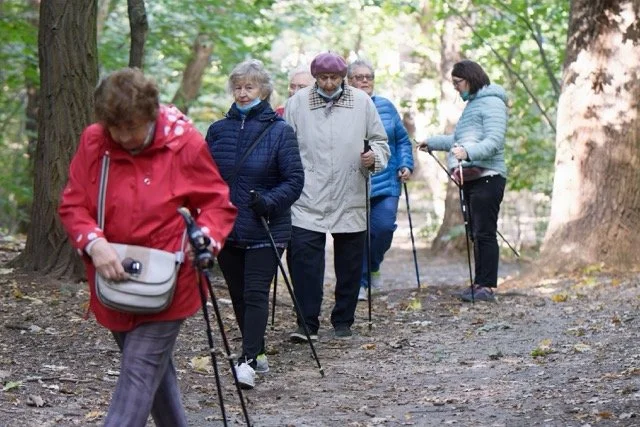
Walking is one of the most effective and accessible ways to build endurance with Parkinson's. It requires no equipment, can be adjusted to any fitness level, and directly trains the kind of sustained movement that daily life demands.
The key is duration over intensity. Start with whatever feels comfortable, even if that's just ten to fifteen minutes. The goal is to keep moving steadily for that entire time without stopping, not to walk fast or cover a specific distance. As that becomes easier, extend the time gradually, adding five minutes every week or two.
Walking also reinforces gait quality. Focusing on taking bigger steps, swinging your arms, and keeping your head up during walks combines endurance training with the amplitude principles that are central to managing Parkinson's movement.
2. Use Interval-Style Movement for Building Capacity
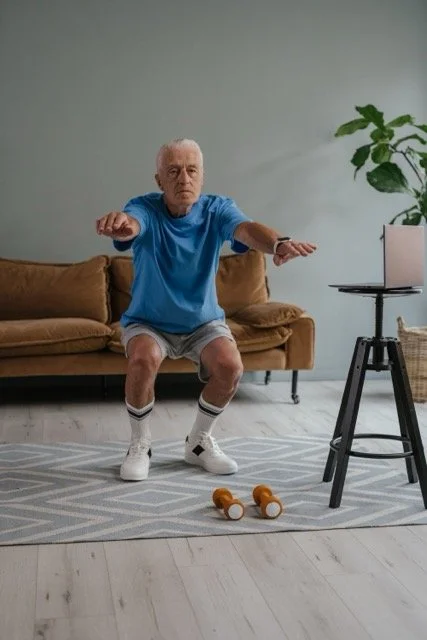
If sustained activity feels too tiring at first, interval-style movement is a practical alternative. This means alternating between periods of active movement and short rest periods, then gradually reducing the rest time as your capacity improves.
For example, walk for two minutes, rest for one minute, then repeat four to five times. Over several weeks, shift toward walking for three minutes and resting for thirty seconds. The total movement time increases while the rest time shrinks, and the body adapts at a pace it can handle.
This approach is gentler on energy reserves than continuous training and gives the nervous system time to recover between efforts, which matters particularly with Parkinson's.
3. Choose Activities You Can Sustain for 20 Minutes or More
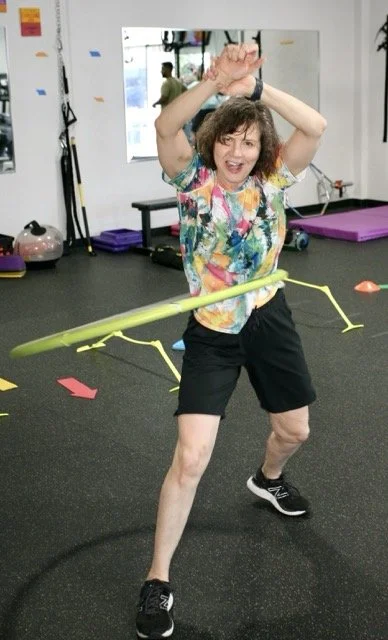
The threshold for meaningful endurance training is roughly twenty minutes of sustained moderate activity. This doesn't have to be walking. Cycling on a stationary bike, swimming, dancing, or any activity that keeps the body in motion at a comfortable pace all count.
The activity itself matters less than the duration and consistency. Pick something you enjoy enough to do regularly, because endurance only builds through repeated practice over weeks and months.
This is also where structured cardio programs for Parkinson's become valuable. A well-designed program takes the guesswork out of how to structure sessions, how to progress, and how to balance effort with recovery so that endurance builds steadily without overwhelming the system.
4. Incorporate PWR! Moves Into Longer Sessions
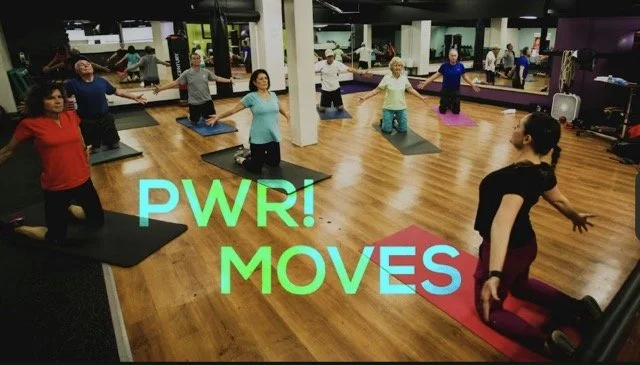
PWR! Moves is a Parkinson's-specific exercise framework built around four fundamental movement patterns: rising from the floor, shifting weight, stepping, and reaching. While PWR! Moves is often discussed in the context of strength and balance, it also contributes to endurance when practiced in longer, continuous sessions.
Moving through PWR! Moves patterns for twenty to thirty minutes without long breaks trains the body to sustain effort across functional movements. Because they mirror what the body does in daily life, the endurance built this way transfers directly to daily tasks in a way that generic cardio sometimes doesn't.
Combining this kind of movement with sustained walking or other aerobic activity gives the body a more complete endurance foundation.
5. Time Training Around Your Medication Window
Most people with Parkinson's have a window of one to two hours after taking medication when movement feels smoothest and most efficient. Scheduling endurance training during this window means you're working with your body rather than against it.
Training when symptoms are better managed allows you to sustain movement longer and with better quality, which makes each session more productive and more encouraging.
6. Protect Recovery Without Overdoing Rest
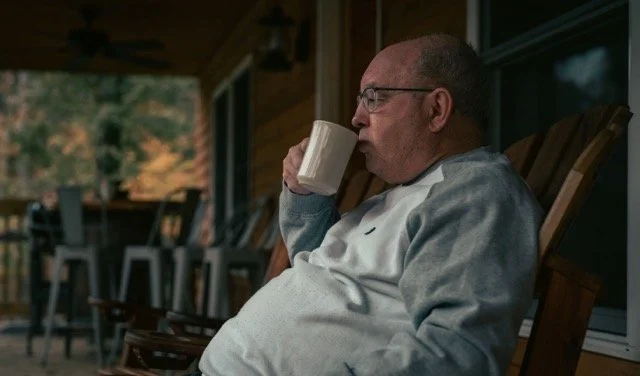
Rest is part of building endurance, not a sign that you're not working hard enough. The body needs time to adapt between sessions. One full rest day per week is appropriate, but more than two consecutive rest days in a row tends to slow progress and makes it harder to rebuild momentum.
On lower energy days, lighter movement like a short gentle walk or a brief stretching session is better than doing nothing at all. It keeps the body in the habit of moving without demanding more than the system can give that day.
7. Track How You Feel, Not Just What You Do

Endurance progress with Parkinson's doesn't always show up on a stopwatch or a step counter first. It often shows up in how you feel: less tired after a walk, more energy in the afternoon, less hesitation before physical tasks.
Keeping a simple log of how you feel before and after sessions, and how your energy holds up through the day, gives you a much clearer picture of whether your endurance is improving than numbers alone.
These strategies build a solid foundation. But turning them into a consistent routine, especially when symptoms vary and motivation fluctuates, is where a structured program with professional support makes a significant difference.
How Rogue Physical Therapy & Wellness Supports Endurance With Parkinson's
At Rogue Physical Therapy & Wellness, building sustainable endurance is part of how we approach Parkinson's care at every level. We understand that fatigue and low stamina are real barriers, and we design our programs around what people can actually sustain, not just what looks good on paper.
We offer two ways to build endurance with Parkinson's, depending on what fits your life.
In-Person Training at Rogue Physical Therapy & Wellness
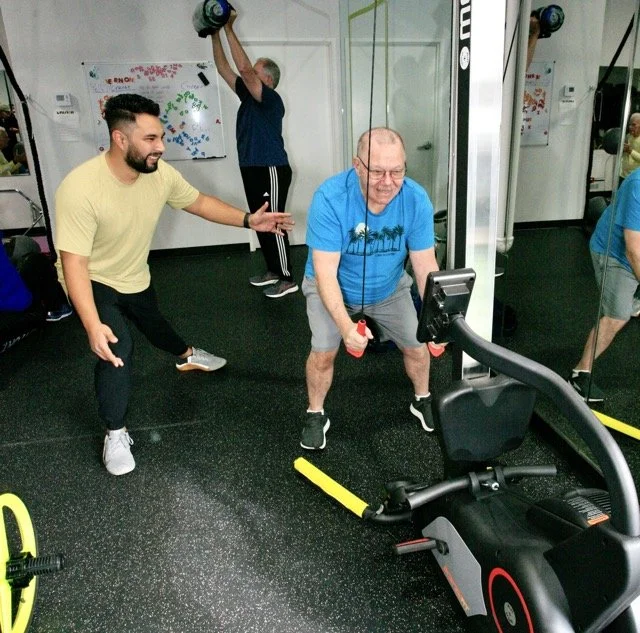
Our in-person program at Rogue Physical Therapy & Wellness in Orange County is led by neurologic physical therapists who specialize in Parkinson's care. Endurance training is integrated into the session structure alongside balance, strength, gait, and amplitude work, so every session contributes to your overall physical capacity.
Training in person means your therapist can observe how your energy holds up across a session, identify when you're approaching your limit, and adjust the pace accordingly. That kind of real-time observation is especially important for endurance training because pushing past the right threshold too often leads to burnout rather than progress.
Members benefit from:
Guidance from Parkinson's-specialized neurologic physical therapists
Sessions that build stamina progressively without overwhelming energy reserves
A structured weekly schedule with approximately 40 classes per week across multiple levels
Class variety that includes sustained movement, strength, balance, and functional training
Real-time feedback and encouragement that keeps effort levels appropriate
A program that adjusts as your endurance and symptoms change over time
The community environment also plays a role in endurance. When you're training alongside others who understand the effort involved in managing Parkinson's, the motivation to keep showing up stays stronger. And showing up consistently is the single most important factor in building lasting endurance.
Many members notice the change in their daily energy within the first few weeks: less fatigue after routine tasks, more capacity in the afternoon, and a general sense that the body is working more efficiently than it was before.
If you're based in Orange County and want hands-on support for building endurance with Parkinson's, you can start with a complimentary 30-minute consultation with one of our physical therapists to find the right fit for where you are right now.
Online Training Through Rogue in Motion
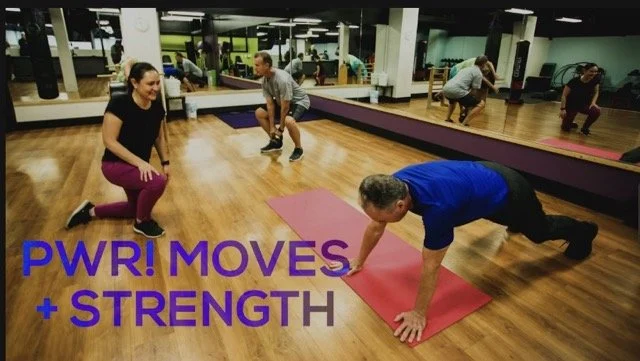
For those who live outside Orange County or prefer to train from home, Rogue in Motion brings Parkinson's-specific endurance training directly to you. The program combines live Zoom classes with an extensive on-demand library so that sustained, consistent training is always accessible regardless of your schedule or location.
Here's what Rogue in Motion members have access to:
Live Zoom classes five days a week across multiple class types, including cardio, strength, balance, and gait
Over 3,000 on-demand videos for Parkinson's-specific training available any time
Sessions designed to build endurance progressively at a pace that matches your current capacity
Flexibility to train during your best medication window and energy peak
Interactive Q&A sessions with a neurologic PT for personalized guidance on pacing and progression
A supportive community that helps you stay consistent week after week
The flexibility of online training is particularly valuable for endurance building because endurance requires frequency. Training most days of the week, even for shorter sessions, is more effective than occasional longer efforts. With on-demand options available any time, it's much easier to maintain that frequency without the logistics of commuting to a clinic.
If you're ready to start building endurance from home, you can explore our aerobic exercise options for Parkinson's through Rogue in Motion and find a class that fits where you are right now.
Both in-person and online training at Rogue Physical Therapy & Wellness share the same goal: helping people with Parkinson's build the stamina to move through daily life with less effort, more energy, and more freedom to do what matters.
Final Thoughts: Endurance Is About Living More Fully
Endurance with Parkinson's is not about athletic performance. It's about having enough in the tank to get through your day, stay connected to the people and activities you care about, and feel less limited by fatigue than you do right now.
That kind of endurance doesn't come from one big effort. It comes from consistent, manageable training that gives your body a chance to adapt and improve over time. Start with what you can sustain, build from there, and give the process enough time to work.
If you want a program that structures the progression for you, provides the right kind of professional support, and fits into the rhythm of your daily life, Rogue Physical Therapy & Wellness has a path for you, whether that's in person in Orange County or online through Rogue in Motion.
Endurance is buildable. And building it changes what daily life feels like in ways that go well beyond exercise.